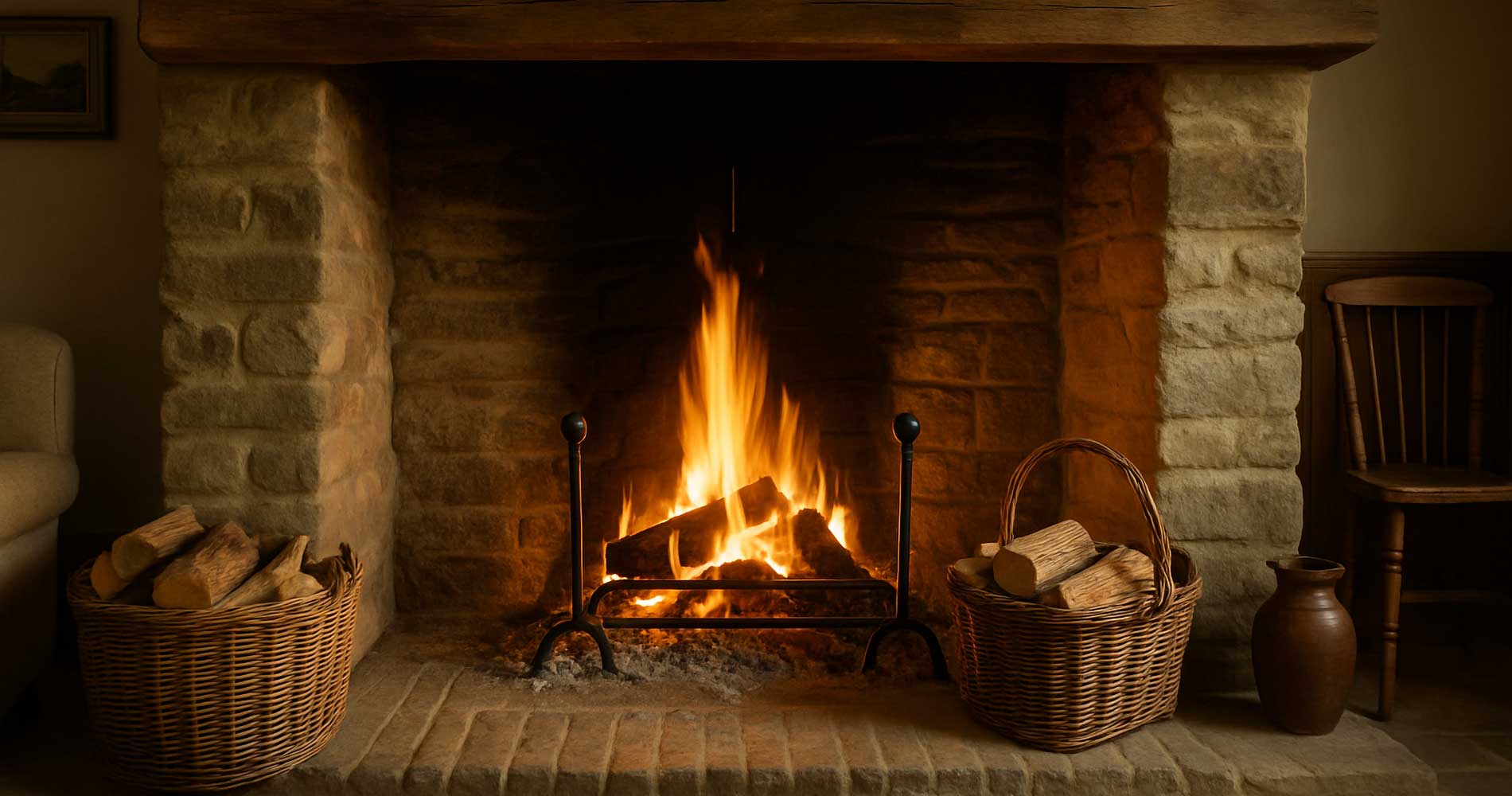
A Flame That Binds Us: The Humble Hearth Through History
There’s something timeless about a fireplace, isn’t there? It’s more than a source of heat. It's comfort. Conversation. Connection. But have you ever paused and wondered where it all began? Who first gathered around a fire indoors, and how did different cultures shape the hearth into what we know today?
Fireplaces aren’t just quaint household features—they’re cultural storytellers. From chilly stone cottages in Scotland to smoke-blackened clay stoves in Asia, every region has its own flame-fuelled chapter. So grab a warm drink, pull up a (metaphorical) chair, and let’s explore how fireplaces have evolved across the globe.
Ancient Beginnings: Where the Hearth First Roared
Humans and fire go way back. As early as 400,000 years ago, ancient hominins were using fire in open spaces. But the shift to indoor fire use? That’s where the magic really starts.
- Neolithic Europe: Early homes in places like Scotland and Orkney had central fire pits. No chimneys yet—just a hole in the roof to let the smoke out (sort of).
- Mesopotamia and Egypt: Hearths were often placed outdoors or in semi-enclosed courtyards for cooking. Heat was important, but smoke control? Not so much.
- China: Around 5,000 years ago, rudimentary stoves began appearing. These evolved into the kang—a raised, heated bed built into homes.
In short? We’ve been finding ways to live around fire for a very long time—sometimes with clever solutions, and sometimes just holding our breath till the smoke cleared.
Medieval Europe: Smoke, Soot and Social Hubs
Fast-forward to medieval times, and fireplaces started to become proper fixtures. Though, let’s be clear—it was still a smoky business.
- The Great Hall hearth: Castles and manors had large open hearths right in the middle of the main room. No chimneys. The smoke rose and (eventually) found its way out through the rafters.
- Chimneys arrive (finally): Around the 12th century, things got cleverer. Chimneys began to be introduced in French and British buildings, drastically improving indoor air quality—and making fires safer and more comfortable indoors.
- Cooking and heating together: The kitchen hearth wasn’t just for boiling cabbage. It was the social centre of the household, often the warmest (and most gossipy) place to be.
You can almost picture it: cold stone walls, low ceilings, and the fire crackling as someone stirs stew in a battered pot. Simple, but deeply human.
Scandinavian Ingenuity: Fire in the Frozen North
If there’s one place that really knew how to make fire work for survival, it’s the Nordics. Scandinavian fireplace design wasn't just about heat—it was about making every log count.
- Tiled stoves (kakelugn): These highly efficient beauties became common in Sweden and Finland by the 18th century. They retained heat long after the fire burned out—ideal for long, freezing nights.
- Closed systems: Unlike open fireplaces, these stoves were designed to trap and radiate heat slowly, warming rooms with fewer resources.
- Minimalist design: Practical, clean-lined, and now surprisingly trendy in modern interiors.
There’s a quiet brilliance to Nordic fireplace design—efficient, beautiful, and built for survival. No fuss. Just clever use of warmth.
Asian Hearths: Low Flames, Deep Roots
Fireplaces in Asia looked very different—and not just because of the food. Instead of roaring hearths, you’ll find gentle flames and functional stoves woven deeply into cultural life.
- China’s kang: More than a heater, the kang was a family sleeping space warmed by flues running under a brick platform. Imagine drifting off to sleep on a toasty bed of clay bricks… not too shabby.
- Japan’s irori: A sunken hearth in the centre of a room, used for both heat and cooking. Family members gathered around, legs tucked under, steaming bowls in hand.
- Korea’s ondol system: A marvel of thermal engineering—floor heating powered by a wood fire running through channels beneath the floor. It’s still used in modern Korean homes (though often updated with electric heat).
Here, fire was about subtlety. The warmth wasn’t always visible—but it was always felt.
New World, New Fireplaces: The American Evolution
Early settlers in North America brought their own fireplace traditions, adapting them to a new and often harsher environment.
- Colonial hearths: Large, deep fireplaces dominated homes—both for warmth and for cooking.
- Benjamin Franklin’s stove: In the 18th century, Franklin developed a free-standing metal fireplace that radiated heat better and reduced smoke. Genius, honestly.
- Modern American fireplaces: Think of the classic suburban setup—brick surround, a mantel for the family photos, maybe even a gas insert for convenience. Comfort above all else.
American fireplace design evolved with each wave of innovation—but always kept that central idea: bring people together around the fire.
Fireplaces Today: A Global Blend
These days, fireplaces come in every shape and style imaginable. You’ve got ultra-sleek glass-fronted gas units, rustic wood-burning stoves, ethanol burners for tiny flats—and yes, even fake log videos looping endlessly on your telly.
- Eco-conscious trends: People are opting for clean-burning alternatives, like pellet stoves or electric fires with smart thermostats.
- Design-led hearths: The fireplace is often now a design feature, not just a heat source—floating mantels, asymmetrical surrounds, bold tiles.
- Heritage meets tech: In some homes, ancient hearths are being modernised with inserts or hybrid systems that blend old-world charm with efficiency.
We might not rely on fireplaces for survival anymore, but they’re still at the heart of how we make a space feel like home.
Final Thoughts: One Fire, Many Stories
Whether it’s a medieval hearth, a clay stove, or a modern electric log flickering behind glass, the essence is the same. Fire connects us—to each other, to comfort, and to the past.
So next time you light your fire, think of the people who stood in front of theirs centuries ago. Different languages. Different clothes. But the same simple joy of warmth on a cold evening.
It’s not just a fireplace. It’s a flame passed through history—now resting, just for a moment, in your living room.